
Found this terrific UK singer/player on Youtube busking in a London street. Her name is Nakisha Esnard and performs under the name Enne`. She is a singer/songwriter and ukulele performer in the genre’s of reggae and soul. Someone to watch out for. There is a link to her Facebook page below.
Ryo Montgomery
Ukulele performer Ryo Montgomery will be appearing at the Melbourne Ukulele Festival in October. Check out their website for more information. There is a feature article about Ryo and his father in todays Age newspaper (link below).
Making Time For Your Ukulele
It is springtime down under, and in Melbourne, as opposed to the far north of Australia, we have the benefit of enjoying the four seasons, sometimes even in one day. In spring there is a lot to do in the garden so my ukulele has been rather neglected lately. Life can get busy for various reasons and this got me thinking about how to make sure that you give time to your ukulele no matter what the circumstances.
As I help to run a Ukulele Group I need to prepare for the next session. I always devote some time for this at least one day in advance and on the Tuesday afternoon before we meet in the evening. These times are set aside for song preparation and ukulele practice. Making a regular appointment with your ukulele is a good method to ensure that you do not forget to put in some practice. You would not miss an appointment made with a professional service provider or a friend without a very good reason and you should treat your ukulele with the same respect. This is easy to justify, as playing an instrument is good for you as well as fun.
Another way to keep up your practice is to always keep your ukulele handy so that you can pick it up when you have a free moment. Just be careful if you have a puppy or small child in the vicinity or you might find that it disappears or gains tooth marks. In these cases it is probably best to have an inexpensive instrument lying around. It is amazing how a few minutes here and there can add up to a lot of playing time.
If you live in a noisy environment where there are a lot of demands on your time, it is a good idea to have some sort of bolt hole where you can play undisturbed or take your opportunity when no one is around. If you are really lucky you may have a dedicated music room or maybe it is time to clean out that junk room, attic or basement and claim it for your own. You could also use the garage or garden shed if your home is too crowded. On a fine day playing under a shady tree would do or you could go to the local park (provided they don’t have those draconian laws against playing musical instruments in a public place). Find a quiet place where you won’t disturb anyone, not that the ukulele is very loud. If no one can track you down, you will have no more interruptions.
Playing with others provides good motivation. Having a “study buddy” is a great help when you are doing a course at university and this will work for the ukulele. If you regularly play with another person it will give you incentive to keep up your practice, as you won’t want to let someone else down. You could alternate playing at each other’s homes to lessen complaints from other housemates or family members. Just an hour’s practice together a week should be enough to make a big difference.
As the saying goes “if you want something done always ask a busy person”, so you should be able to find some time to give to your uke. Now that my garden is tidy, I am looking forward to many fine spring and summer days when I can spend any free moments outside and play my ukulele.
Kat
Bayside Ukes Member
Why The Ukulele is Just Right
A cute cartoon that shows why the ukulele is the happiest stringed instrument of them all.
Baritone Uke Tutorial
Manitoba Hal demonstrates a great variation of an old favourite on the baritone ukulele. This should also be of interest to other uke players as you can play the same chord forms with the usual GCEA tuning in the Key of C.
Who’s Afraid of The Ukulele?
Is there such a thing as a Ukulele phobia? I was forced to ponder this question after the addition of a new puppy to our home.
As you have probably learnt from previous blogs on this site, I love to play my uke and interact with a dog. Our other dog, although being a bit naughty as a puppy, is never bothered by the sound of the ukulele. When we first brought the new puppy home, I practiced my uke while standing in the same room and everything seemed fine. A few days later when we had a guest, I got out my ukulele to demonstrate a song. I accidentally shut the lid of the case when she was standing nearby and she jumped. When I started to play the puppy became distressed and ran away. She would not come anywhere near me while I was playing the uke and I was not even playing loudly. I tried to show her the instrument on her level. She sniffed it but when I carefully plucked the G string, she ran away again. I wondered what I had done wrong as she was not bothered the first time I played when she was in the room.
When you Google “ukulele phobia” there is only one case of a human who has a phobia about ukuleles (because they thought it looked like an alien), but there is nothing about dogs being scared of this harmless instrument. It must be uncommon for dogs to have this particular fear as there are plenty of videos on You Tube with dogs trying to play the uke or doing a sing-a-long and they look perfectly happy.
How could I prevent the puppy’s anxiety about the ukulele from developing into a permanent phobia? I love to play my ukulele and it is a big part of my life, so I thought that the solution was to introduce it gradually. To get her used to the instrument I left it in it’s case on the floor. She sniffed it then walked away. I made the mistake of leaving the handle upright and she came back and began to chew it, but when I put the handle down she left it alone. The next day I decided to give playing another go but this time standing up again. I set up a music stand carefully, did some vocal warm-ups and then began to play and sing. No reaction. She completely ignored me and went back to puppy activities. So what was the difference?
I think that because I was closer to her level when sitting, the sound of the ukulele was much louder to sensitive puppy ears. Shutting the case suddenly startled her and made her anxious before I had even started to play and this did not help. Also the human-like shape of the instrument when upright could have been threatening. I don’t sit down often which is just as well and I won’t be doing this again until she is well and truly used to the sound of the ukulele and feels more comfortable in her new home.
It just goes to show that each dog is different and you need to be very careful when introducing them to new experiences. In the future I hope that she will be able to sing-a-long with our other dog, who really enjoys the ukulele.
Kat, Bayside Ukes Member
Jake Shimabukuro Rocks the Ukulele
Recorded in Nashville for his new album, Jake Shimabukuro performs “Kilauea”. Classic Rock played by a master. The look on the Bass guitarist’s face says it all.
Ukulele Strumming Lesson
If you want to improve your strumming technique, here is a great tutorial from James Hill that is well worth the 12 minutes plus of viewing time.
UKULELE STRAPS: One Size does not fit all
Sometimes when you buy a product it does not always fulfill your expectations or ends up creating unforeseen problems. I have found this to be the case with the Ukulele Straps that I have purchased. Luckily I was able to come up with some creative solutions.
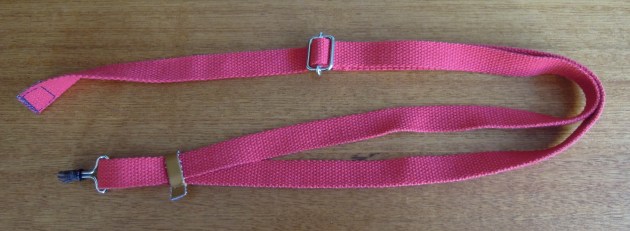
My first Ukulele was concert sized and did not come with a strap button at the base so I bought a common lasso type that hung around my neck with a hook to support the ukulele at the sound hole. I thought that this was the best option, as the ukulele did not have the internal support needed to drill a hole for a strap button. After playing with the lasso strap for I while I found that the neck of my ukulele would wobble around as I played and always felt unstable which did not help my left hand fingering. I thought that if the strap anchored the neck in some way that this would resolve the problem. I had seen the type of straps designed for classical guitars where one end of the strap was tied to the neck and the other end came from behind the guitarists back to hook into the sound hole. I decided to change the lasso strap so that it supported my ukulele in this manner.
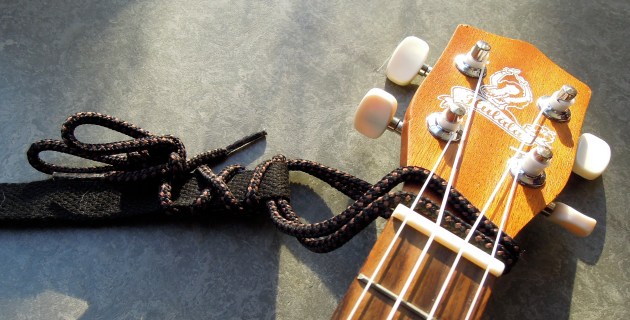
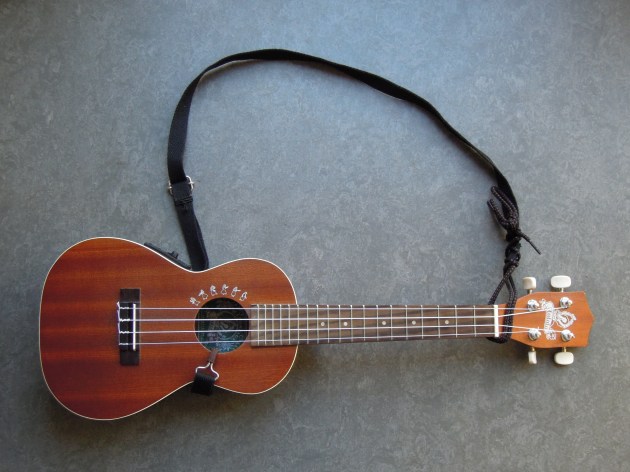
First I undid the strap from its buckle, removed the hook and turned it to face the opposite direction. Next I reinserted the strap into the buckle and adjusted it so that it was long enough to go diagonally over my back and under the ukulele to connect to the bottom of the sound hole at the front. Then I sewed the free end of the strap back on itself to form a loop and ran a strong shoelace through this and tied it to the head under the strings. (a word of caution: don’t let go of the neck or the ukulele will flop forward, come adrift from the strap hook and fall to the floor). Now with the ukulele supported in this way the neck no longer wobbled when I played and I did not need to buy a new strap.
My second ukulele does have a strap button and I first bought a thin leather Mandolin strap, but this always slipped around on my back and drove me crazy. Fortuitously I received a colourful brocade strap as a birthday present that was wider and less likely to slip. It had leather fittings to attach to the neck and strap button. When I went to attach it I found that the leather was very stiff and thick and it was really hard to fix it around the button, which is also the output jack of the electric pick-up. Eventually I managed to get it on. It was quite a tight fit because the jack button was not very deep. Over time the tightness of the strap started to unscrew the jack and that was not very desirable, so I took off the strap. As I really liked it, I decided to shave off some of the leather on the back of the strap with a scalpel blade to reduce the thickness by about half around the jack button. Now the end moves freely without undoing the jack and I can still use my favourite strap.
You don’t need to put up with these irritating problems. There is always a solution and a bit of simple DIY can customize a strap or you could even make your own. So get creative!
Kat, Bayside Ukes Member
Ukulele Satisfaction
After a bout of antarctic weather, Cold and Flu season has struck in Melbourne. We need some ukulele fun to cheer us up as we sneeze and cough. Here’s that lovely little Japanese band, U900 to make us smile and forget the winter aches and pains.
Cheers!
Bayside Ukes
 baysideukes.com